Ever since I first started my blog, I had been thinking of featuring the city in which I was born and where I have spent all my life (well almost, but for a year or two here & there!). Its better late than never and from time to time I will try to present different facets of my beloved city in this blog.
Calcutta (or Kolkata as it is called now) is rather difficult to summarize, or introduce in a few sentences. In terms of age, Kolkata is rather young (believed to have been founded in 1690) as compared to Delhi or Beneras (Varanasi). Despite its short history, it was the capital of British India till 1911. During that time the city was at the forefront of a mini-Renaissance and produced some of India's greatest thinkers, social reformers, politicians, poets and scientists in the nineteenth & twentieth centuries. On the other hand, post India's independence in 1947 and especially post the politically turbulent period in the 1970's, Kolkata slumped into what some called (rightly, or perhaps a wee bit too harshly) a 'dying city'. It's fortunes have since looked up and it has regained some of the earlier economic & social dynamism.
The short, yet eventful, history of Kolkata has had a deep impact on the basic fabric of the city. I will be touching upon the various facets of Kolkata's life & culture in the forthcoming posts. For now, I wish to touch upon currently the only visible aspect of the British 'Raj' in Kolkata - that is the architecture. Many monuments and important buildings in Kolkata are a remnant of the 'Raj' and examples of typical nineteenth century colonial architecture.
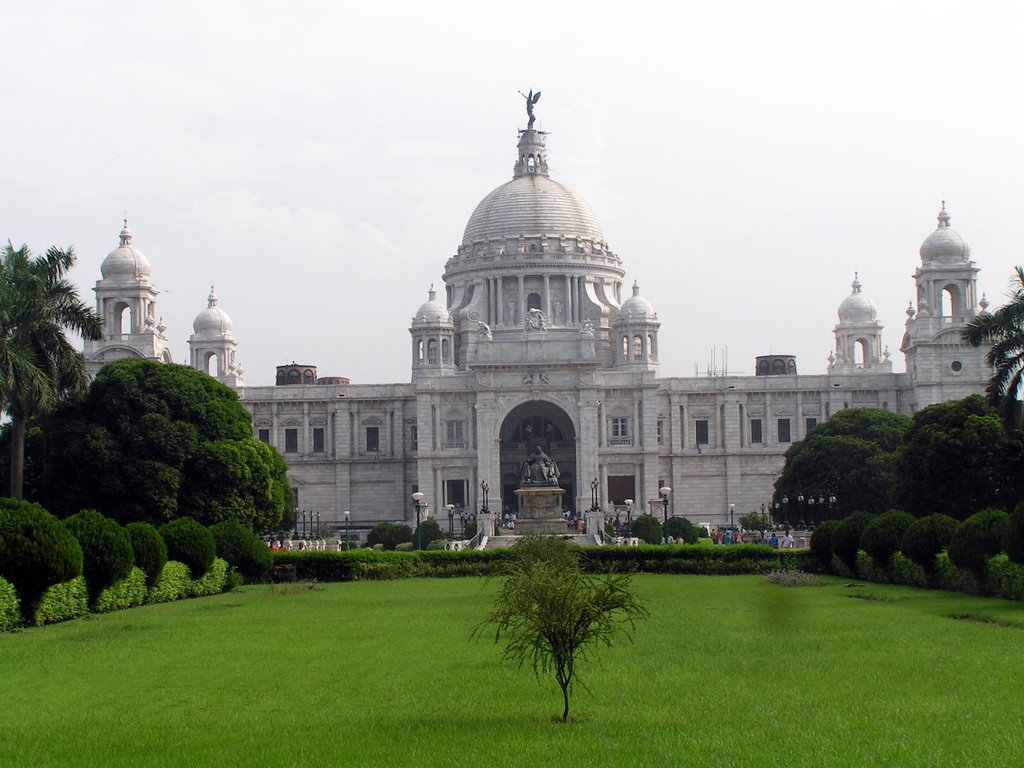
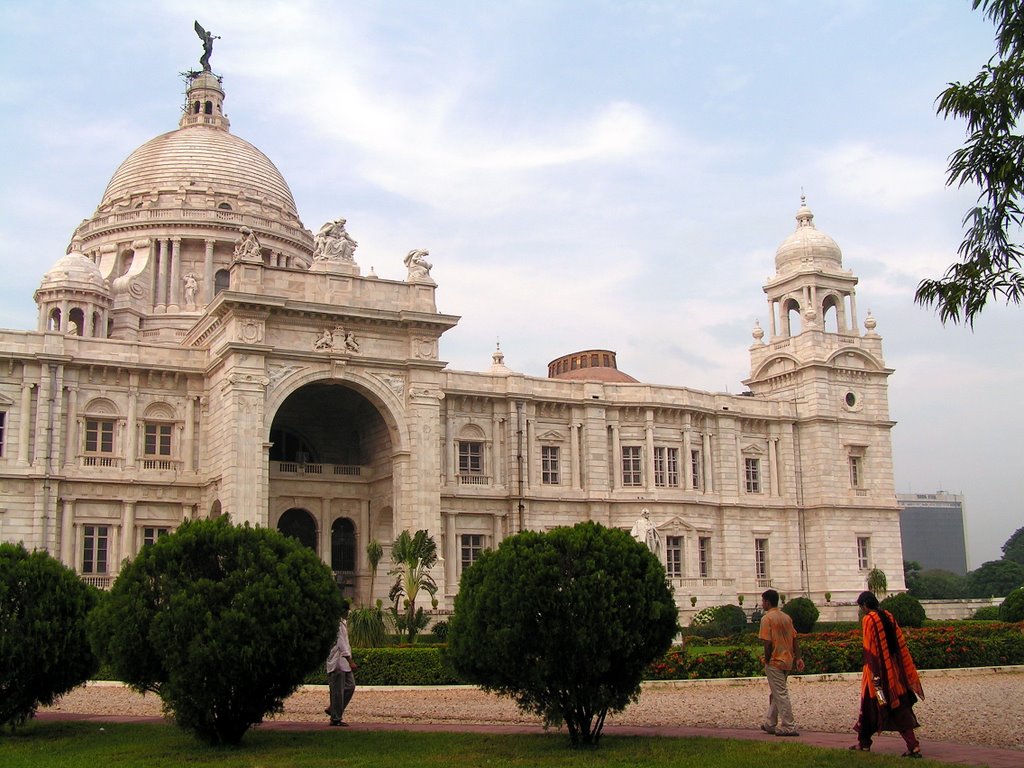
 The Victoria Memorial was built by the British as a tribute to Queen Victoria. The white marble palace stands now as perhaps the most famous landmark in Kolkata's skyline. It now houses an musuem where many valuable artefacts of British India are on display. The Victoria Memorial is an even more dramatic & enchanting sight in the evening when it is brilliantly lit up.
 The Howrah Bridge spans the Hoogly river and connects Kolkata to it's most important railhead at Howrah. Thousands of people use it every day, both on wheels and on foot. Due to its age (it was built way back in 1943), movement of trucks and other heavy vehicles have been restricted. Apart from being a vital artery of the city's traffic movement, the bridge is also an engineering marvel. It is a cantilever bridge held together by rivets and bolts.
More on other facets of Kolkata in coming posts..